Best iGaming Traffic Sources in 2026
 02.06.2026 | 7 min

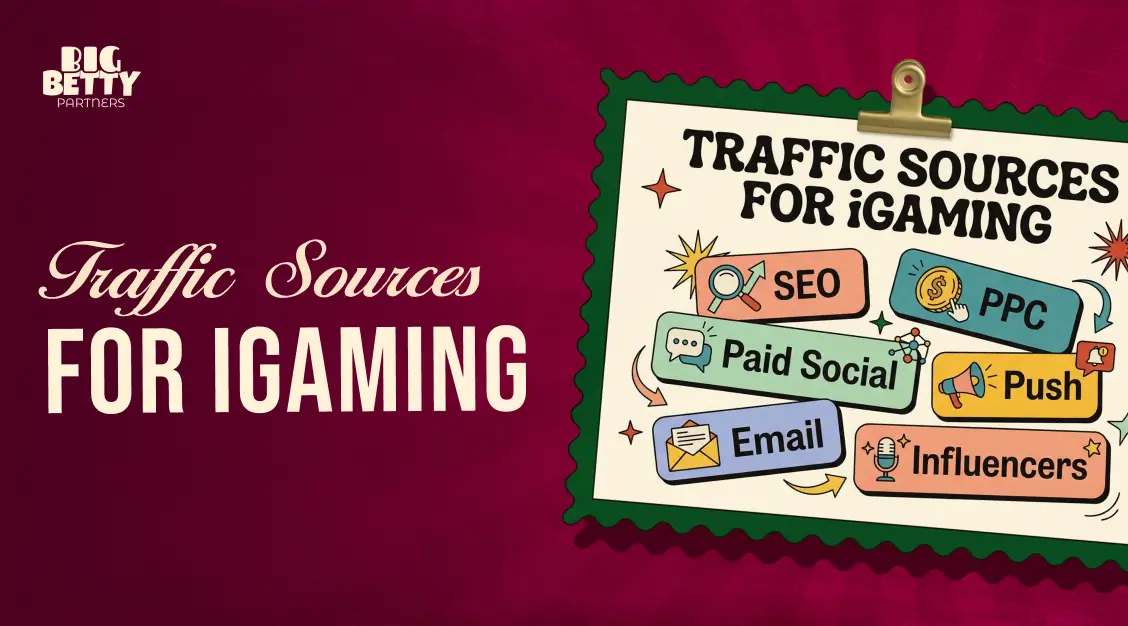
iGaming affiliate traffic is the collection of channels through which an affiliate brings paying players to an affiliate program. In this business, the traffic source decides nearly everything downstream: conversion rate, player lifetime value, creative restrictions, scaling potential, and whether CPA, Revenue Share, or Hybrid deals make sense. SEO traffic converting at 20-60% reg-to-deposit naturally aligns with Revenue Share models, while in-app traffic converting at 15-30% fits CPA-focused acquisition better.
This guide covers every viable iGaming traffic source in 2026: SEO, paid search, social, push, native, ASO, influencer, messenger, and programmatic acquisition. It explains which platforms allow restricted-content advertising, where affiliates get their accounts banned, and how experienced media buyers layer channels rather than running one-channel operations forever. The target audience is affiliates with 0-3 years of iGaming experience who are deciding where to invest their time and budget, written from within Big Betty Partners. This affiliate program manages a marketing portfolio of 8 brands.
Part 1 — Channels That Compound
The Traffic Sources That Compound
Four acquisition channels still reward patience in 2026: SEO, email marketing, influencer partnerships, and brand-driven organic traffic. These channels share two structural advantages — higher conversion intent and longer player lifecycle.
Big Betty Partners' data show SEO/PPC traffic converting at 20-60% from reg-to-deposit, while higher-friction channels, such as in-app acquisition, convert at 15-30%. Affiliates building through organic intent and trust layers usually retain player value over months rather than in short campaign bursts.
The trade-off, peach, is time. SEO commonly needs 6-12 months before meaningful rankings appear. Email lists require 3-6 months before segmentation compounds. Influencer relationships mature over quarters, not weeks.
Affiliates relying only on paid traffic remain dependent on platform mood swings — the second campaign pauses, and the revenue stream flatlines. Affiliates layering foundational channels beneath paid acquisition survive algorithm changes, policy shifts, and ad account turbulence far more consistently.
Part 2 — Core Traffic Landscape
Best Traffic Sources for iGaming in 2026
SEO continues to lead in long-term player value and Revenue Share compatibility. Push traffic dominates raw acquisition volume. Influencer marketing commands the strongest trust premium because audiences already trust the personality presenting the offer.
This section maps the full channel landscape and helps affiliates match budget, compliance appetite, and commission model to the right starting point.
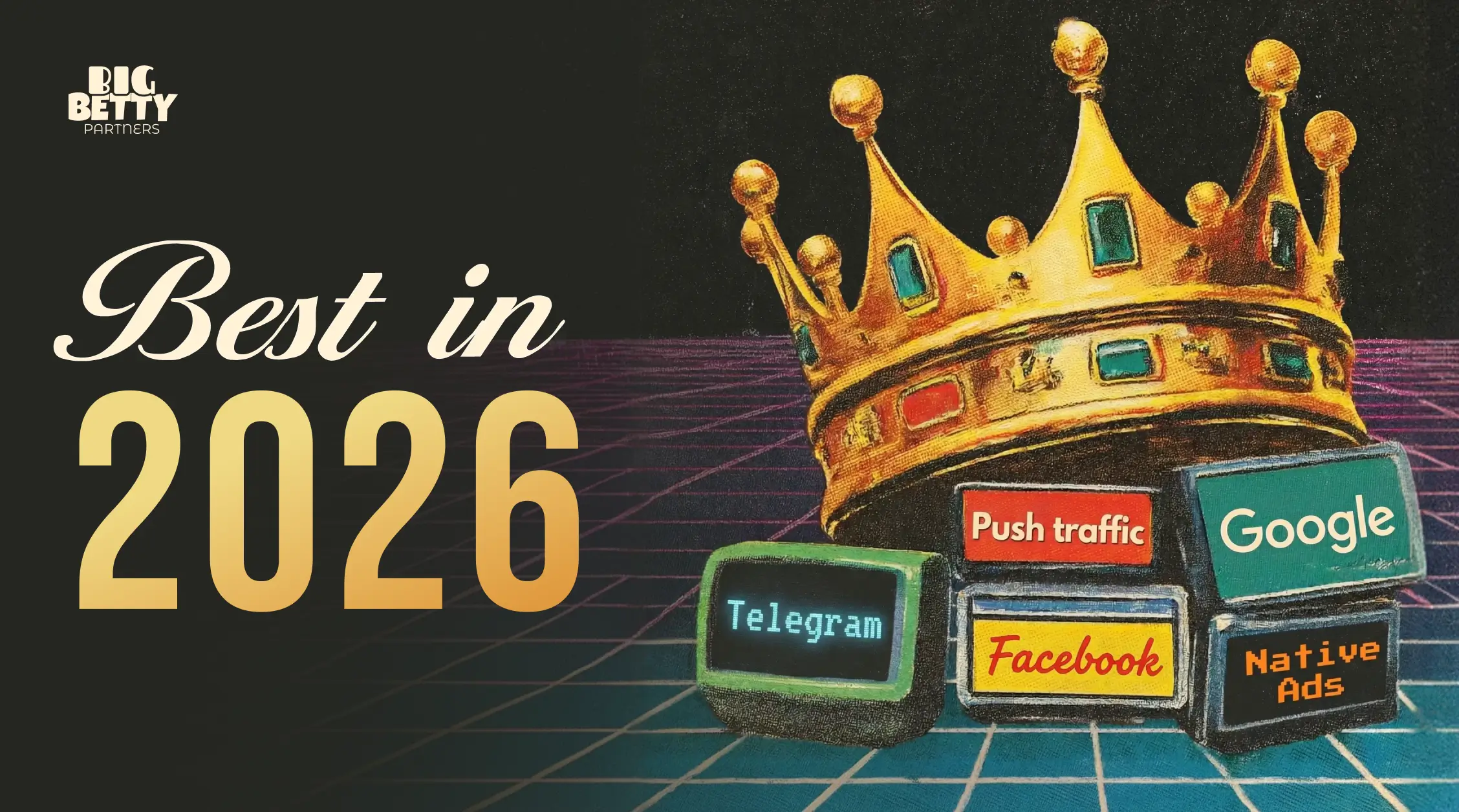
Best Traffic Sources for iGaming Affiliates in 2026
The modern traffic landscape includes SEO, paid social, push notifications, native ads, ASO, email marketing, influencer campaigns, and messenger ecosystems. Each channel differs on conversion intent, scalability, compliance friction, and time-to-first-FTD.
The mistake most beginners make, captain, is choosing channels based on hype instead of operational fit. Affiliates with strong content and patience usually outperform on SEO and email; media buyers scale through paid social and native.
See the full traffic landscape
Part 3 — Organic & Owned Traffic
SEO, Email, and Influencer Acquisition
Organic and owned channels compound without rising CPMs. They survive platform policy shocks better than rented social or search inventory and typically deliver the strongest reg-to-deposit rates when executed with depth rather than surface-level experimentation.
iGaming SEO in 2026: Full Strategy for iGaming Affiliates
SEO continues producing the highest-LTV iGaming traffic because search intent self-qualifies users before the click. Big Betty Partners benchmarks place SEO and PPC reg-to-deposit conversion between 20-60%.
The framework revolves around keyword clustering, topical authority, technical optimization, and link acquisition. SEO is slow — 6-12 months before major traction is common — but rankings become resilient against platform volatility.
Read the SEO strategy
Email Affiliate Marketing for Casino Affiliates: Build a List That Converts
Email remains the only major acquisition channel an affiliate fully owns. No algorithm suppresses your list, and no CPM inflation doubles acquisition costs overnight.
Deliverability matters more than affiliates expect. The affiliates who scale email focus on segmentation, lifecycle timing, and trust-building instead of blasting identical offers daily.
See the email playbook
Influencer & Streamer Marketing for iGaming: YouTube, Twitch and Beyond
Influencer and streamer acquisition carries the highest trust multiplier across mainstream traffic sources. Audiences spend years building loyalty with creators, which compresses skepticism when recommendations appear naturally.
Most partnerships structure compensation through flat fees, Hybrid models, or Revenue Share agreements. Affiliates succeeding here focus on disclosure practices, creator fit, and platform-safe content formats.
Read the influencer playbook
Part 4 — Paid Acquisition & Compliance
Where to Spend, What Gets You Banned
Paid acquisition delivers faster feedback loops than organic traffic, but it introduces higher costs and significantly more compliance friction. Every major advertising platform restricts iGaming content differently.
The platforms worth serious budget allocation in 2026 are the ones operating documented, restricted-advertiser systems and transparent review processes. Serious affiliates avoid “secret workaround” tactics because account stability matters more than temporary bursts of scaling.
The guides below cover paid search, paid social, native acquisition, and the policy traps that separate scalable media buying from account graveyards.

Casino PPC Compared: Facebook, Google Ads & Native for iGaming Affiliates
Google Ads, Meta advertising, and native networks remain the three dominant paid acquisition ecosystems. Google captures high-intent search demand; Meta scales retargeting; native dominates top-of-funnel discovery.
The comparison is about aligning funnel economics with each channel. Google traffic often carries higher CPCs but stronger conversion quality. Native excels when affiliates understand advertorial funnels and audience fatigue.
Read the paid comparison

Google Ads for Gambling: Certification, Restrictions & Account Safety
Google’s restricted-content advertiser certification remains mandatory for direct iGaming campaigns. Without certification, campaigns simply won’t run.
Creative limitations remain strict across copy, imagery, targeting, and landing-page flow. Affiliates who survive long-term treat policy management as operational infrastructure rather than an afterthought.
See the Google Ads guide
TikTok Affiliate Marketing & Gambling Ads Policy for iGaming 2026
TikTok’s advertising framework remains restrictive toward direct iGaming promotions. Affiliates succeeding on TikTok rarely run direct-response campaigns.
TikTok works well for audience building and top-of-funnel engagement, but conversion usually happens off-platform on owned channels such as email lists or comparison pages.
Read the TikTok policy breakdown

Native Ads for iGaming: Best Networks, Formats and Creatives
Native advertising remains one of the most scalable acquisition formats because it blends into editorial environments naturally. Major networks include Taboola, Outbrain, MGID, and RevContent.
Creative structure determines profitability more than targeting alone. Affiliates scaling native obsess over bid optimization, creative rotation cadence, and audience segmentation. Far out, but true.
See the native ads guide
“Every affiliate who scaled past €10k/month learned the same thing: paid traffic is the accelerator, not the engine. The engine is whatever channel keeps converting when ad accounts get paused — and ad accounts always get paused eventually in this vertical.”
Sara
Content Strategy Lead, Big Betty Partners
Part 5 — Niche & Specialized Channels
Niche Traffic Sources That Reward Specialization
Beyond SEO and mainstream paid acquisition sit four specialized channels with unusually high upside for disciplined operators: push traffic, programmatic display, ASO, and messenger marketing ecosystems.
Push campaigns can scale at €0.005 CPC on clean networks while collapsing on poor-quality inventory. Specialized acquisition channels reward operators willing to develop technical depth instead of surface-level experimentation.

Push Traffic for Gambling Affiliates: Does Push Notification Marketing Still Work?
Push traffic remains one of the lowest-cost acquisition channels available to affiliates. Large push networks provide hundreds of thousands of daily impressions with CPCs measured in cents.
The affiliates who make push work focus on network vetting, anti-fraud filtering, and aggressive optimization. The difference between profitable push and scrap traffic comes down to source quality and filtering discipline.
Read the push traffic guide

Programmatic Advertising for iGaming: DSPs, Networks & Display Formats
Programmatic display becomes powerful once affiliates develop meaningful retargeting audiences. Every visitor who failed to deposit becomes an addressable segment across broad inventory ecosystems.
DSP selection, attribution modeling, audience segmentation, and frequency control matter. Affiliates running display compare assisted conversion value with direct paid channels rather than first-click attribution alone.
See the programmatic guide
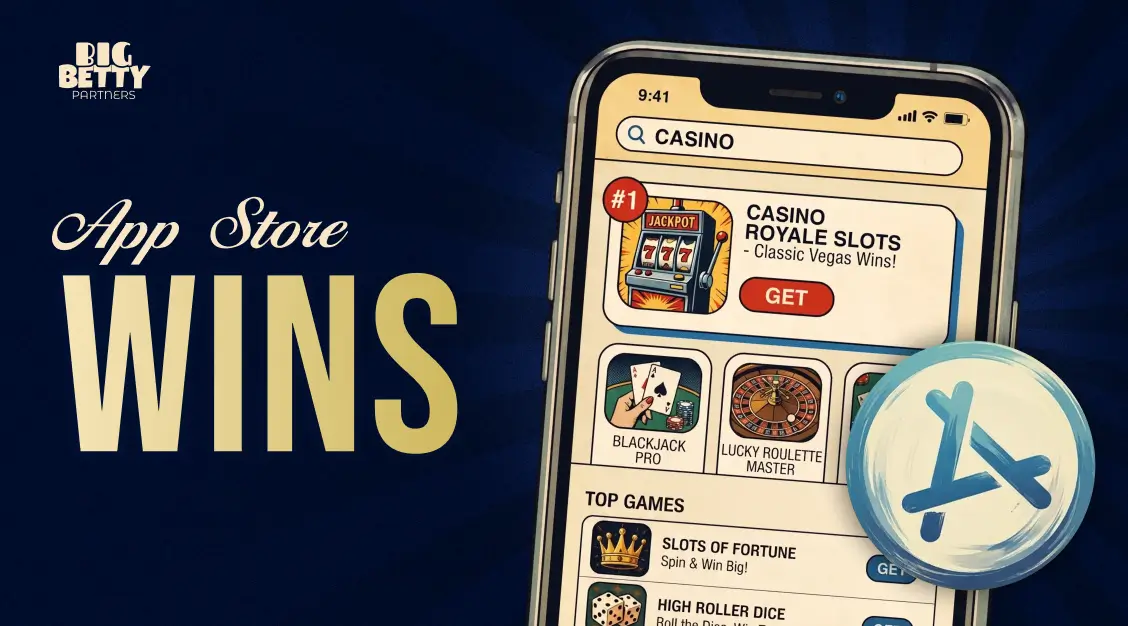
ASO for iGaming Affiliates: Drive Mobile Traffic Through App Stores
App Store Optimization remains underutilized in iGaming because platform review systems create operational friction. Most affiliates avoid the channel entirely.
Big Betty Partners data places quality ASO traffic at 15-30% reg-to-deposit conversion. Strong execution depends on keyword research, metadata positioning, and post-install attribution clarity.
Read the ASO playbook
Telegram Casino Affiliate: Messenger Traffic and RevShare
Telegram, WhatsApp, and Discord remain among the most trusted direct communication channels because users opt in voluntarily. Your message lands directly in the feed or inbox.
Affiliates succeeding with messenger ecosystems build structured communities, automation flows, and retention mechanics instead of manually broadcasting random offers.
See the messenger marketing guide
Part 6 — Strategy & Tier-1 Scaling
Picking, Layering, and Avoiding the Channel Traps
Every affiliate eventually reaches the same strategic crossroads: buy traffic for immediate feedback or invest months building organic channels first? The answers depend on funnel economics, commission structure, and operational maturity.
The predictable failure patterns barely change: overspending before tracking works, running one ad account with no backup, and scaling channels before proving cohort profitability. Serious scaling requires layered infrastructure, disciplined testing, and diversification without losing focus.

Should You Buy Casino Traffic? When It Works and How to Do It Right
Buying traffic through third-party networks accelerates funnel validation when executed carefully. It allows affiliates to test landing pages and conversion mechanics before heavy long-term investment.
The danger arises when affiliates buy inventory blindly without understanding source quality or fraud-filtering standards. Serious buyers vet transparency, audience quality, and attribution before scaling spend.
Read the buy-traffic guide

10 Costly Mistakes Affiliates Make with Gambling Traffic
The same operational mistakes repeat year after year: launching without S2S tracking, depending on single ad accounts, scaling before proving cohort profitability, and misaligning CPA versus Revenue Share incentives.
Most failures reveal themselves late. Poor attribution hides bad traffic. Shallow creative testing appears profitable until fatigue spikes acquisition costs.
See the 10 mistakes
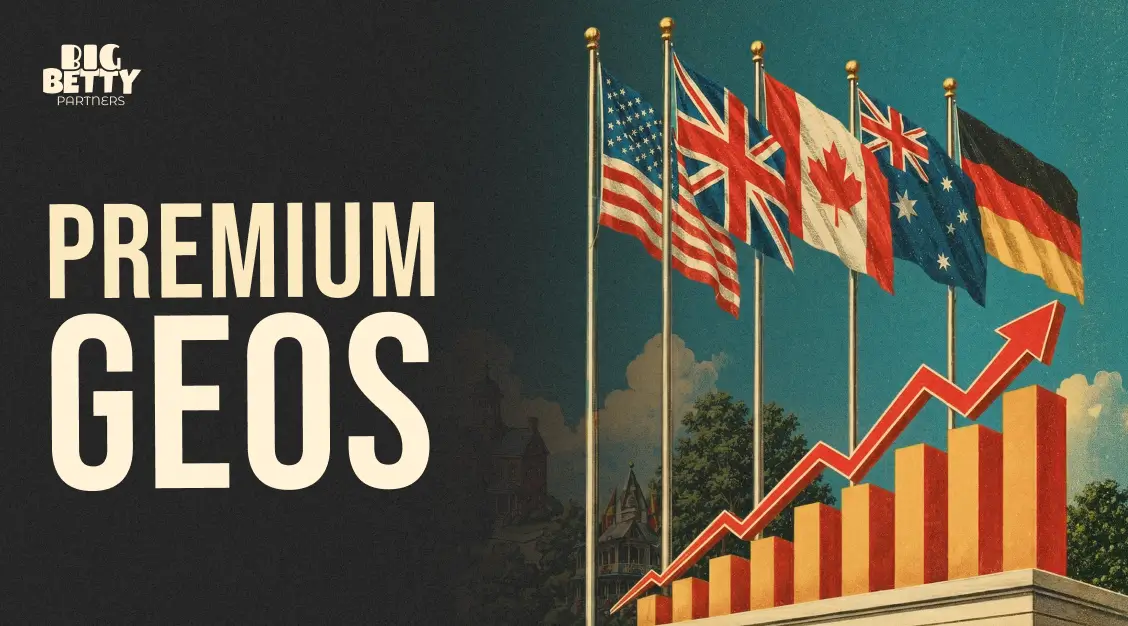
iGaming PPC in Tier-1: Channel Economics and What Actually Scales
Scaling paid acquisition across Tier-1 markets requires a fundamentally different operational structure. CPCs rise sharply, audience saturation increases, and creative fatigue arrives faster.
Successful affiliates invest in account infrastructure, creative-refresh systems, audience laddering, and negotiation leverage with affiliate programs — systems that withstand competition while maintaining profitable unit economics.
Read the Tier-1 scaling playbook
Closing
This guide covers the traffic layer of the affiliate stack — the acquisition channels available in 2026, where each channel fits operationally, and which platform traps separate scalable affiliates from burned-out media buyers. Each card links to a deeper tactical breakdown covering creative formats, network selection, bidding frameworks, and optimization mechanics.
Traffic is only one pillar inside the broader iGaming affiliate ecosystem. Affiliates who succeed in the long term build sustainable systems rather than relying on short-term wins.
F.A.Q.
-
What are the best traffic sources for iGaming affiliates?
The highest-LTV sources are SEO (reg2dep 20-60% on organic comparison traffic), email lists (own-channel resilience), and influencer/streamer audiences (trust premium). The highest-volume sources are paid social (Meta, TikTok with policy compliance) and push traffic. The best mix depends on the commission model and Tier — SEO + Hybrid for long-term scaling; paid + CPA for fast validation.
-
Which traffic source converts best for iGaming offers?
SEO/organic comparison traffic converts at the highest reg-to-deposit rate (20-60% per Big Betty Partners data) because the audience arrives with explicit intent. PPC converts at similar rates but at a significantly higher cost per click. Paid social (FB/ASO) sits at 30-50% reg2dep; in-app at 15-30%. The best channel is the one whose reg2dep × player LTV × your commission model produces the strongest unit economics for your specific funnel.
-
How much does iGaming paid traffic cost?
CPCs vary by channel and Tier. Google Ads restricted-content clicks range from low single-digit euros in lower-cost markets to €5–€20+ in Tier-1 markets. Meta retargeting clicks typically cost €0.50–€3. Push traffic runs in cents-per-click. Native ads cluster around a €0.10–€0.80 CPC. The unit cost matters less than the resulting reg2dep × LTV — a €10 CPC that converts at 40% to a high-LTV player beats a €0.10 CPC that converts at 1% to short-lifecycle traffic.
-
Can iGaming affiliates use Google Ads?
Yes, but only with Google’s restricted-content advertiser certification — direct iGaming ads from uncertified advertisers are blocked. The certification process requires documented business eligibility, proof of target market, and a landing page audit. Certified advertisers can run keyword-targeted campaigns in approved markets. Google continuously audits campaigns, and a single policy violation can result in certification revocation.
-
Is TikTok good for iGaming affiliates?
TikTok restricts direct iGaming advertising and rejects most direct-response campaigns. Affiliates who succeed on TikTok run adjacent content (strategy, education, lifestyle around the vertical) rather than direct response. The channel works for top-of-funnel awareness and audience building; the conversion happens on the affiliate’s owned channels (email list, comparison site, etc.), not on TikTok itself.
-
What is the highest-converting traffic source for iGaming?
By reg-to-deposit rate, organic comparison/review SEO traffic is consistently highest (20-60% per Big Betty Partners data) because the audience self-qualifies before clicking. Influencer-direct traffic can match or exceed that on a per-campaign basis when the influencer-audience fit is exact. Email list traffic, once warmed up, converts at similar rates, with the added benefit of zero ad cost per send.
-
Should I focus on one traffic source or diversify?
The first 6-12 months: focus. Picking up SEO, email, push, paid social, ASO, and influencer simultaneously without depth in any of them wastes budget and stalls learning. After one channel is profitable per-cohort: diversify. Single-source dependency is the most common cause of affiliate income collapse — one ad-account suspension, one algorithm change, and the business stops. The right model is one mature channel plus 1-2 channels in active testing.
-
How do iGaming affiliates avoid ad account bans?
Three structural practices:
- Read each platform’s restricted-content policy in full before running anything.
- Maintain multiple ad accounts as backups, prepared and warmed before they’re needed.
- Keep landing pages compliant with disclosure, age-gating, and creative claims — landing-page audits, not ad-copy reviews, trigger most bans.
Affiliates who treat compliance as a checklist instead of a culture get banned within their first six months.