iGaming Affiliate Software & Tools: The Complete 2026 Stack
 07.07.2026 | 5 min


The iGaming affiliate tech stack is the set of tools that determines what you can track, scale, and keep. Affiliates relying on cookie-only tracking frequently lose attributed conversions. In contrast, many “best affiliate software” comparisons combine trackers, affiliate program platforms, and fraud-prevention tools, even though these categories solve completely different problems. Understanding the distinction between them is essential before investing in any technology.
This guide covers the four functional layers of the affiliate stack: tracking and attribution, affiliate program platforms, organic acquisition tools, and retention mechanics. Each layer serves a unique purpose, from recording conversions and validating commissions to generating traffic and improving long-term player value. The goal is to help affiliates identify tools that align with their business model without paying for features they are unlikely to use.
Part 1 — Tracking & Attribution
How Conversions Actually Get Counted
Tracking is the foundation of the affiliate stack because every optimization decision depends on attribution accuracy. Server-to-server (S2S) tracking and postback integrations consistently outperform cookie-only configurations, while industry adoption has increasingly shifted toward server-side measurement. Without a reliable tracking layer, reporting, optimization, and commission validation become significantly more difficult.
Three platforms dominate affiliate-side workflows: Keitaro, Binom, and Voluum. Each offers a different balance of click-processing performance, routing flexibility, automation, and infrastructure management. On the affiliate program side, correct postback configuration determines whether your internal reporting matches the program dashboard at month-end. Most commission disputes originate from tracking discrepancies rather than commission calculations themselves.
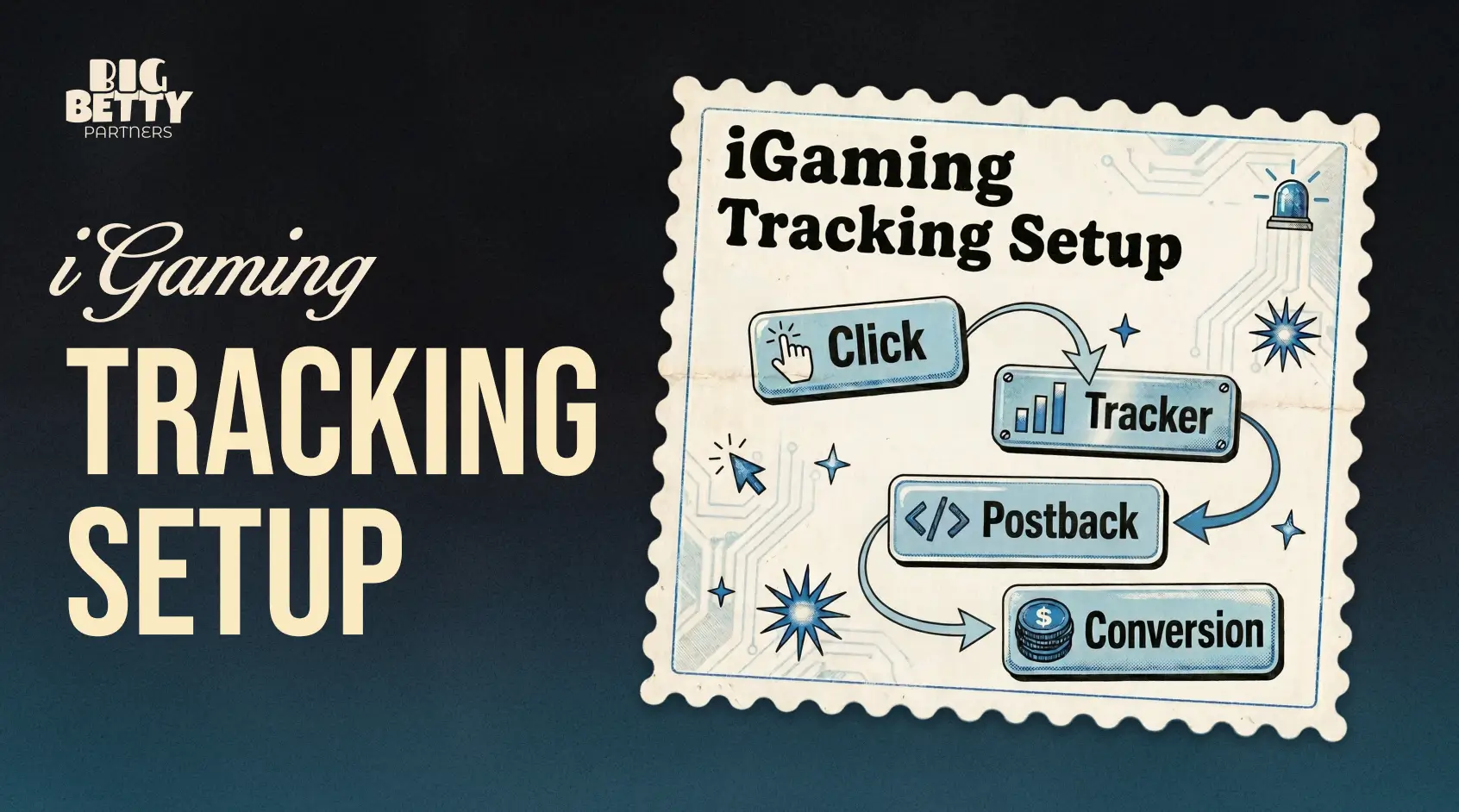
iGaming Affiliate Tracking Setup: The Tools and Methods That Actually Work
This guide explains S2S tracking in practical terms, including how postback URLs connect affiliate programs with tracking platforms. It covers click identifiers, parameter mapping, and the validation process required to ensure attribution accuracy.
The walkthrough also highlights common implementation mistakes that silently reduce conversion counts. Particular attention is given to parameter passthrough debugging because successful reconciliation depends on accurate data transfer between the affiliate tracker and the affiliate program platform.
Read the tracking setup guide

Keitaro vs Binom vs Voluum: Which Tracker Wins for iGaming Affiliates?
This comparison evaluates the three tracking platforms most frequently used by serious iGaming affiliates. Binom is often selected for high-volume traffic environments where click-processing speed is critical.
Keitaro appeals to affiliates who prioritize routing flexibility and cost efficiency, while Voluum offers cloud-based convenience for teams that prefer not to manage servers. The comparison includes pricing considerations, S2S compatibility, automation capabilities, and recommended use cases.
See the tracker comparison
Postback and API Integration for Keitaro, Binom, and Voluum
This guide focuses on implementation details, including postback structures, sub-ID mapping, API integrations, and hybrid tracking approaches. Accurate event transmission is essential for registrations, first deposits, and revenue-related events.
It also outlines troubleshooting procedures when click counts align but conversion counts do not. The goal is to provide a repeatable framework for maintaining reliable reporting across multiple systems.
Read the postback integration guide
Part 2 — Affiliate Program Platforms
How Programs Run You — and What to Demand Before Sending Traffic
Once tracking is configured, affiliates must evaluate the platform running the affiliate program. Modern affiliate program platforms provide real-time reporting, API access, detailed statistics, and reliable postback support. Legacy systems often lack the transparency required for serious performance marketing.
The platform determines reporting depth, commission flexibility, fraud-monitoring capabilities, data accessibility, and payout infrastructure. These factors directly influence how efficiently affiliates can analyze campaigns and validate revenue. Understanding platform quality is therefore just as important as evaluating commission structures.
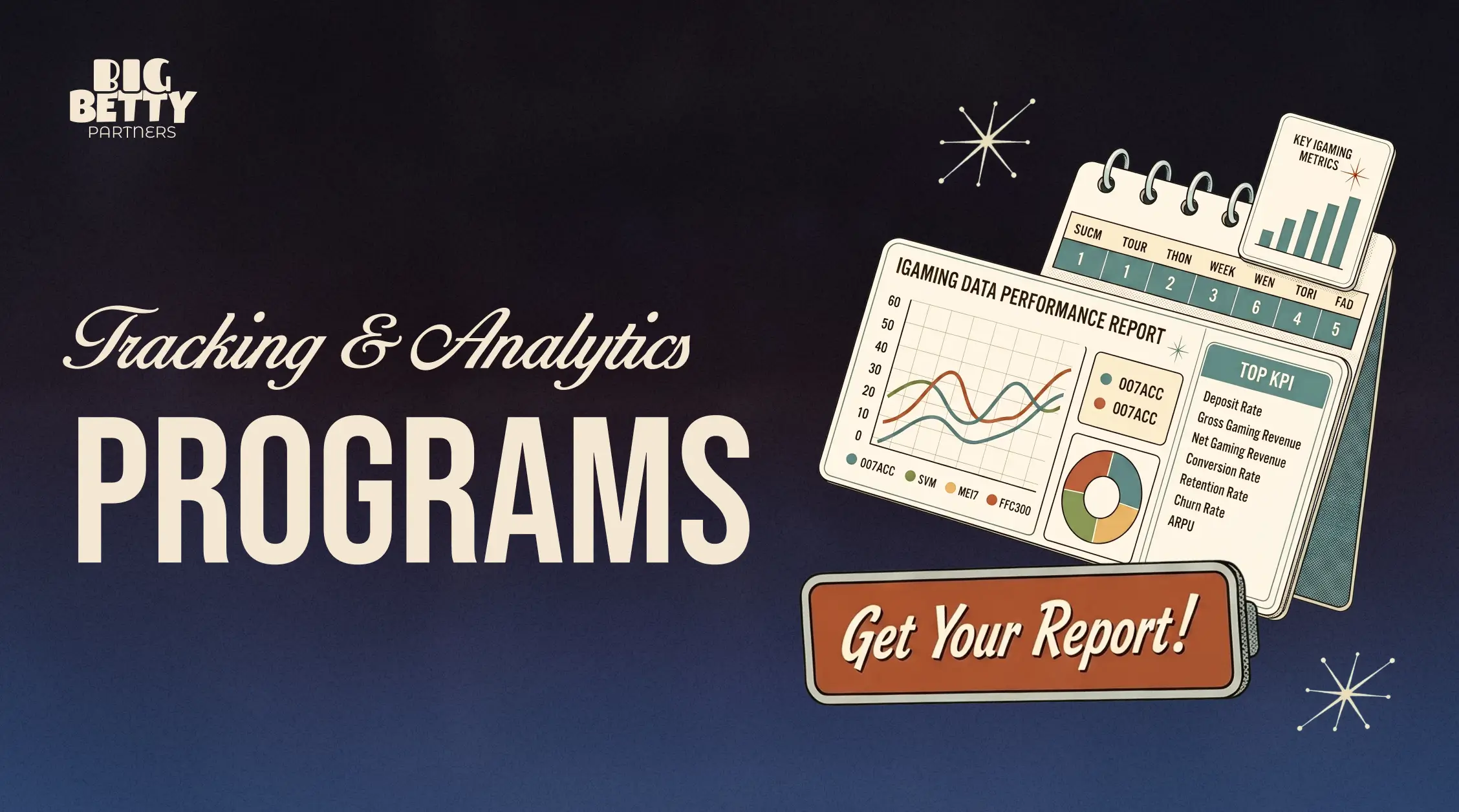
Best Affiliate Programs for Tracking and Analytics in iGaming
This guide evaluates affiliate programs according to reporting quality rather than commission percentages. Areas for comparison include real-time statistics, sub-ID visibility, event-tracking granularity, API availability, and historical reporting depth.
Reliable data is one of the most valuable assets an affiliate can have. Programs with transparent reporting reduce reconciliation issues and support more informed optimization decisions.
See the program ranking
iGaming Affiliate Tracking Software Compared: Affilka, Scaleo & More
This comparison examines leading affiliate program platforms and their reporting ecosystems. Key evaluation areas include commission configuration, reporting transparency, fraud-detection capabilities, and analytical depth.
The guide also explains how platform sophistication can serve as a signal of operational maturity. Affiliates gain a clearer understanding of what information is available and how that affects performance management.
Read the platform comparison

iGaming Affiliate Software Compared: Affilka, Cellxpert, NetRefer & More
This broader comparison reviews platform capabilities, including multi-brand management, sub-affiliate support, integrations, and reporting infrastructure. It focuses on how platform architecture affects affiliate growth opportunities.
Affiliates often underestimate the influence of the underlying platform on long-term scalability. Understanding those differences can improve program selection and negotiation outcomes.
See the full software comparison
“Most affiliates pick programs by commission percentage. The affiliates who scale pick by the platform running the program — because the platform decides what data you see, what events get tracked, and whether the dashboard reflects performance accurately at month-end. A 40% RevShare on a legacy system may deliver less value than a 30% RevShare on a modern platform with real-time NGR reporting by sub-ID.”
Sara
Content Strategy Lead iGaming
Part 3 — Organic Acquisition Tools
The SEO Stack That Brings Traffic In
Organic acquisition in the iGaming industry is highly competitive and requires a structured technology stack. Successful affiliates typically combine keyword research, competitor analysis, rank tracking, on-page optimization, technical auditing, and link-management tools.
The articles in this section focus on strategy, tool selection, and operational execution. As search environments evolve and organic visibility becomes more competitive, affiliates require a disciplined approach supported by accurate data and repeatable processes.

iGaming SEO Strategies That Actually Build Rankings in 2026
This guide explains how affiliates compete with established publishers that have strong topical authority. It covers keyword prioritization, content depth, backlink acquisition, technical optimization, and changes in modern search results.
The emphasis is on sustainable SEO practices that improve visibility through authority, relevance, and content quality. Affiliates can use these principles to build durable organic traffic assets.
Read the iGaming SEO playbook

iGaming SEO Tools That Actually Move Rankings: Ahrefs, Semrush, and What Else You Need
This guide compares major SEO platforms and supporting tools used by affiliates. It evaluates keyword databases, competitor intelligence, content optimization capabilities, and technical auditing functionality.
The analysis also explains which subscriptions can be delayed at lower traffic levels and which become essential as websites scale. Tool selection is aligned with operational requirements rather than feature checklists.
See the SEO tool stack

Link Cloaking for iGaming Affiliates: What’s Safe and What Gets You Banned
This guide examines link-management practices, including redirect structures and affiliate URL organization. It explains the distinction between editorial link management and deceptive practices that violate platform policies.
Popular WordPress solutions, redirect configurations, and compliance considerations are discussed from a technical perspective. The focus remains on usability, maintainability, and operational safety.
Read the link cloaking guide
Part 4 — Retention & Engagement
The Mechanics That Compound Affiliate Earnings
Retention is often overlooked when affiliates evaluate software stacks, yet it directly affects long-term Revenue Share performance. Engagement systems influence how long users remain active, thereby impacting recurring revenue generation.
Industry research continues to show positive relationships between structured engagement systems and retention outcomes. Affiliates who understand retention mechanics are better positioned to evaluate program quality and long-term revenue potential.

Gamification in iGaming: Mechanics That Drive Retention vs. Gimmicks That Don’t
This guide explores retention-focused engagement systems such as loyalty tiers, missions, progress tracking, and achievement structures. It distinguishes between mechanics that improve long-term engagement and features that appear attractive but fail to influence behavior.
The affiliate perspective is equally important. Understanding a program’s engagement framework can provide valuable insight into user lifetime value and long-term Revenue Share performance.
Read the gamification breakdown
Closing
This guide covers the technology layer of the iGaming affiliate ecosystem: tracking, affiliate program platforms, organic acquisition, and retention. Together, these four functional layers influence measurement accuracy, growth potential, and long-term revenue retention.
Each section links to dedicated deep-dive resources that explore configurations, comparisons, and implementation details in greater depth. Technology represents one pillar of affiliate success alongside strategy, traffic acquisition, commission models, and markets with a strong presence in Europe.
Pillar P1 — iGaming Affiliate Marketing: Complete Guide
Pillar P2 — Traffic Sources for iGaming Affiliates
F.A.Q.
-
What software do iGaming affiliates need to start?
The minimum stack depends on the traffic type. Organic content affiliates need a keyword research tool, a link management plugin, and a basic analytics setup. Paid traffic affiliates typically require a tracker such as Keitaro, Binom, or Voluum alongside the tools provided by their advertising channels. Every affiliate should implement S2S postback tracking from the beginning because attribution accuracy is fundamental to performance analysis.
-
What is the best affiliate tracking software for iGaming?
For affiliate-side tracking, Keitaro is commonly chosen for its flexibility, Binom for its processing speed, and Voluum for its cloud-based management. On the affiliate program side, platform quality determines the reporting environment, available integrations, and transparency. The most suitable option depends on whether the objective is traffic management or affiliate program administration.
-
How much does iGaming affiliate software cost?
Costs vary significantly by category. Tracking platforms, SEO suites, and link-management tools each operate under different pricing models. Affiliate program platforms are generally selected by the affiliate program rather than purchased directly by affiliates, making platform evaluation an important part of partner selection.
-
What is a postback URL, and why does it matter?
A postback URL is a server-to-server notification that sends conversion data directly between systems. Because it does not depend on browser cookies, it provides more reliable attribution and reduces data loss.
Accurate postback implementation improves reconciliation between affiliate-side reporting and affiliate program reporting. Modern S2S implementations generally provide more complete attribution than cookie-only approaches.
-
What is the difference between affiliate tracking software and an affiliate program platform?
Affiliate tracking software records clicks, conversions, and campaign-level activity across multiple programs. Affiliate program platforms manage affiliate accounts, commissions, reporting, and payments within a specific program.
Both layers serve different purposes and work together. Reliable reporting depends on accurate configuration across both systems.
-
Are SEO tools like Ahrefs and Semrush worth it for iGaming affiliates?
The value of advanced SEO tools increases as a site grows. Smaller projects can often operate effectively with a limited set of tools, while larger operations benefit from multiple data sources, dedicated rank tracking, and advanced auditing capabilities.
Because the iGaming industry is highly competitive, access to quality data can provide a meaningful operational advantage.
-
What is affiliate link cloaking, and is it allowed?
Link cloaking converts long affiliate URLs into cleaner branded links on a publisher’s own domain. It is widely used for organization, usability, and link management purposes.
Link cloaking and S2S tracking solve different problems. One manages how links appear to users, while the other manages attribution and reporting.
-
How do gamification tools affect affiliate income?
At the user level, engagement systems can improve retention and extend revenue-generating activity. At the affiliate level, partner-focused engagement programs can encourage participation and performance consistency.
Affiliates should evaluate how incentives are structured and ensure that traffic quality remains the primary objective. The affiliate is responsible for traffic sources and traffic quality, regardless of the tools or affiliate programs being used.